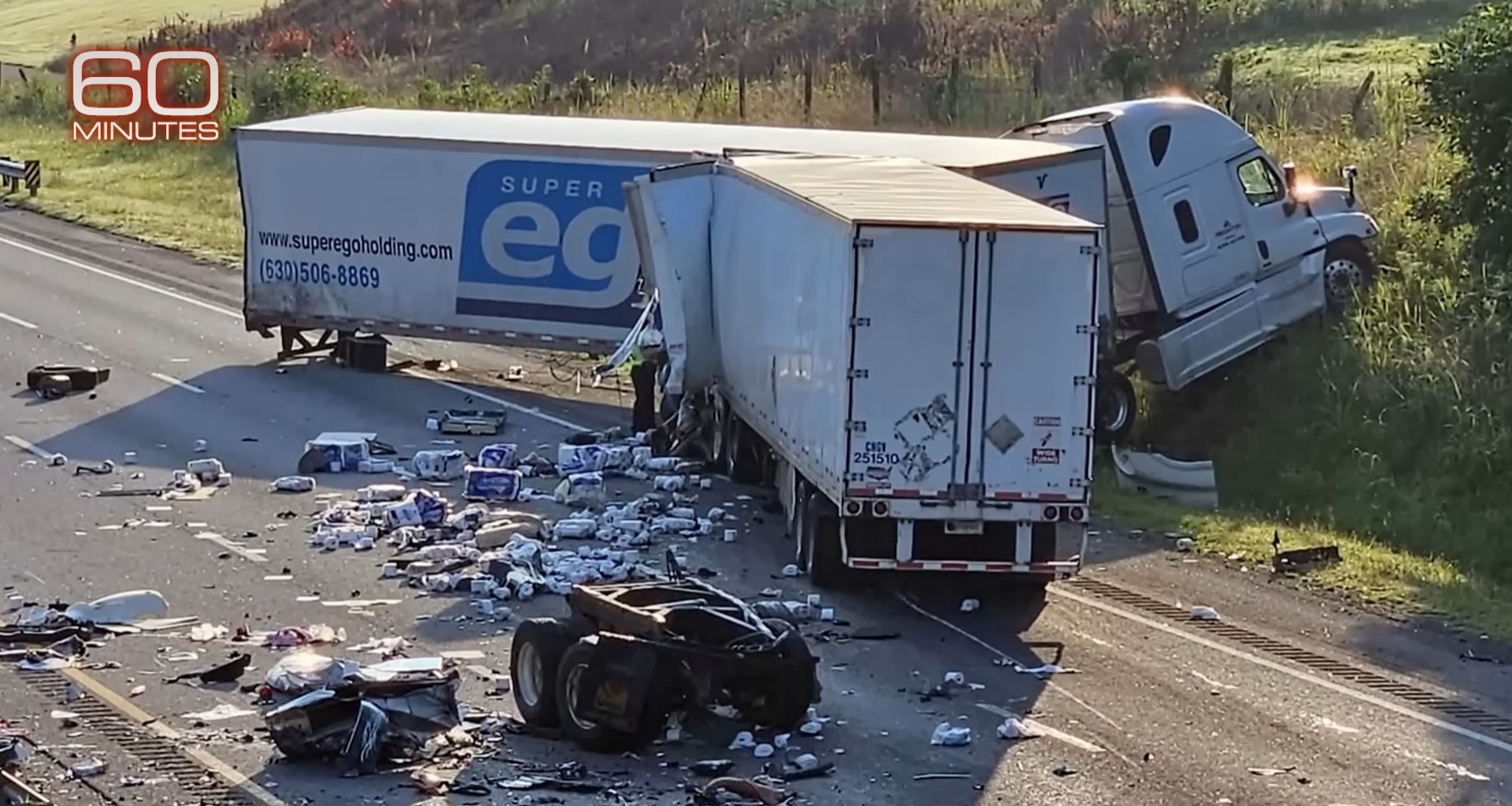
The recent 60 Minutes investigation didn’t reveal something new.
It confirmed what the trucking industry has known for years.
- ELD manipulation.
- Chameleon carriers.
- Fraud operating at scale.
The real question is not how this happened.
It’s why it’s still happening.
The System Behind the Problem
Major shippers like Amazon and Walmart rely on large freight brokerages such as C.H. Robinson to move freight across the country.
- That structure creates efficiency.
- But it also creates distance.
- And that distance creates something even more dangerous:
- A lack of accountability.
What Happens When Cost Becomes the Only Metric
In today’s brokerage-driven model:
- Shippers push for lower costs
- Brokers source the cheapest available capacity
- Carriers compete to win the load
But not all carriers are playing by the same rules.
Some operate within federal regulations.
Others manipulate logs, bypass Hours of Service limits, and cut every corner possible.
And yet, they still win freight. Why?
Because they’re cheaper.
The Disconnect No One Can Ignore
In 2025, C.H. Robinson named Super Ego as Carrier of the Year.
At the same time, Super Ego has been publicly tied to practices now under national scrutiny, including:
- ELD manipulation
- Hours of Service violations
- Broader compliance concerns
That is not just ironic. It is a direct reflection of what the system rewards.
Volume over verification.
Cost over compliance.
What This Means for Companies Like Amazon and Walmart
When freight is layered through brokers, companies at the top often do not have full visibility into:
- Who is actually hauling their freight
- How that freight is being moved
- The level of risk attached to those operations
The reality is simple.
They may not know.
And that is exactly how unsafe carriers continue to operate at scale.
Where Meiborg Draws the Line
Meiborg refuses to operate that way.
Meiborg’s in-house, premium asset-backed brokerage is built on standards most of the industry has moved away from.
- Vetted, insured carrier network
- Strict compliance expectations
- Real-time tracking and full visibility
- A commitment to driver safety and accountability
Most importantly:
Carriers like Super Ego and their subsidiaries do not touch Meiborg freight.
If a qualified, top-tier carrier is not available, Meiborg does not compromise.
It uses its own fleet of over 200 trucks to ensure the job is done safely and correctly.
Why This Model Can’t Compete on Price
Let’s be clear.
A brokerage operating with this level of discipline cannot compete with models that rely on questionable carriers to drive costs down.
It was never designed to.
Because lower cost in this environment often comes from:
- Ignoring regulations
- Pushing drivers beyond legal limits
- Cutting safety out of the equation
That is not efficiency.
That is risk.
This Is Bigger Than One Carrier
Super Ego is not the only example.
It is one example of a much larger issue.
An industry where:
- Fraud can scale
- Accountability can be avoided
- And compliant operators are forced to compete against it
The Work That’s Already Been Done
Zach Meiborg has been pushing this issue long before it reached national headlines.
He has traveled to Washington, D.C. multiple times to meet with:
- FMCSA leadership
- U.S. Senators
- Members of Congress
Advocating for enforcement of laws that have existed for nearly 70 years.
- The message has never changed.
- The rules are already in place.
- They just need to be enforced.
The Bottom Line
60 Minutes didn’t expose a new problem.
It exposed a system that has been allowed to operate this way.
Until enforcement catches up, and until the industry starts valuing compliance as much as cost, nothing changes.
Meiborg will continue to operate differently.
Because in this industry, how freight moves matters.
World Class, Delivered.